2023 Presidency: Atiku Abubakar Woos Nigerians With A Reminder Of The Good Times
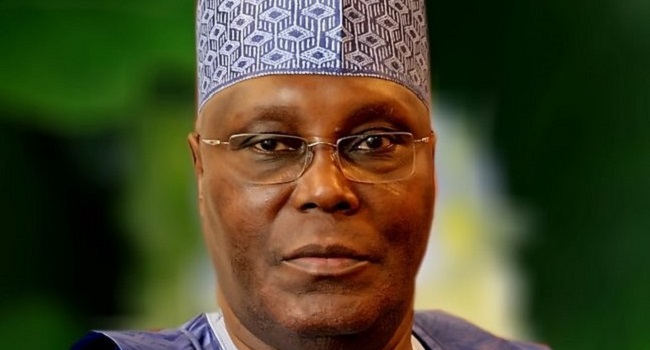
Atiku Abubakar is hoping it will be sixth-time lucky in his quest to be Nigeria’s next president having fallen short on five previous attempts, the first in 1992.
The 75-year-old has circled the summits of public life for most of his career as a top civil servant, a vice-president, and a prominent businessman, making his fortune in the oil sector and giving some of it away to charity.
But the highest office in the land has eluded him, and in February 2023 he goes again, offering his credentials as a seasoned political operator and serial entrepreneur as the remedy for Nigeria’s ills.
Africa’s most populous country is facing soaring unemployment, widespread insecurity, high inflation, and a sluggish economy heavily dependent on fluctuating oil revenues.
Mr Abubakar’s campaign is built on his success as vice-president between 1999 and 2007, where as head of the government’s economic team he oversaw successful reforms in the telecommunications, pensions and banking sectors that led to jobs and GDP growth.
However, his critics point to accusations of financial impropriety against him which they say make him unsuitable for the top office in a country where corruption is a huge challenge.
He is accused of cronyism, especially when he oversaw the privatization of key government assets. He denies any wrongdoing and says the charges are politically motivated.
Mr Abubakar will be hoping to unite the fractured opposition Peoples Democratic Party (PDP), where cracks have emerged since his victory at the primary in June.
Some influential southern governors begrudge his emergence, saying it was the turn of the south to produce Nigeria’s next president after eight years of President Muhammadu Buhari, a northerner like Mr Abubakar.
His choice of a running mate has also stirred an open rebellion within the party, with many believing that the snub of the highly influential governor of Rivers state, Nyesom Wike, might prove costly.
A popular figure within the party, Mr Wike was considered the overwhelming favourite, having lost out in the presidential primary, but Mr Abubakar instead chose Delta state governor Ifeanyi Okowa.
Outside his party, Mr Abubakar faces a formidable opponent in Bola Tinubu, the candidate of the ruling All Progressives Congress (APC), and a bourgeoning youth-driven campaign led by the Labour Party’s Peter Obi who is targeting votes in traditional PDP areas in southern Nigeria.
There is also the challenge of convincing young Nigerians that he is a suitable choice, given his age, and that he is a break from the political class many have lost confidence in.
An affable, enterprising figure, Mr Abubakar moves adroitly between the worlds of commerce and politics – qualities that, his supporters say, will help him unite the country and revive the economy.
He has been involved in Nigerian elections for decades and has recently fluctuated between the two dominant parties, the APC and PDP – where he was a founding member, seeking a shot at the presidency.
His first exit from the PDP, in 2006, coincided with an investigation into his record as vice-president, when he was accused of having diverted $125m (£95m) worth of public funds towards his business interests.
Similar charges appeared in a 2010 US Senate report, which accused Mr Abubakar of having transferred $40m (£30.55m) of “suspect funds” to the US, using his American wife’s bank account.
The charges have never been tried in court, and Mr Abubakar has rejected the allegations of corruption as politically motivated. In January 2019, he visited Washington DC, ending speculation that he was avoiding travel to the US because he might face arrest there.
About The Author