
Trouble Times
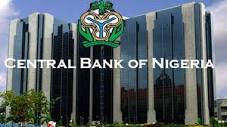
Trouble Times
The economic crunch confronting Nigeria takes a heavy toll on the real sector of the nation’s economy and banks as they grapple with cost cutting measures that has seen some sacking staff in order to stay afloat
By George Fabian
The prevailing harsh operational environment in Nigeria instigated by the dwindling global oil price, slide in Naira value against foreign currency, multiple taxes, the Central Bank of Nigeria, CBN unfriendly policies and high operational cost has started taking a heavy toll on both the Organised Private Sector, OPS which constitute the manufacturing industries and the banks.
One of the latest companies already feeling the pangs of the worsening economic problem in the country which has fuelled high operational cost is a renowned food and beverage giant, Flour Mills Nigeria Plc.
The challenges the company is facing in recent times manifested in its nine months financial results ended December 31, 2015 released in February which shows that whereas its revenue grew by 8.2 percent, high costs of operations impacted negatively on the bottom line of the company. In a bid to reduce costs, the company last year merged five of its wholly owned subsidiaries-Golden Noodles Nigeria Limited, Golden Transport Company Limited, FMN Cement Industries (Nigeria) Limited, New Horizon Flour Mills Limited and Quilvest Properties Limited. Investigation by this magazine reveals that the fall out of that merger was the retrenchment of some workers.
The multinational manufacturing companies are equally affected by the economic crunch now sticking out like a sore thumb. Just recently Unilever Nigeria Plc and Guinness Nigeria Plc voiced their predicament complaining that the prevalent shortage of dollar caused by the crash in oil price is forcing local suppliers to buy foreign currency at the parallel market, a development that further worsened the operational costs which also affected prices. Yaw Nsarkoh, Managing Director of Unilever Nigeria Plc who reiterated the adverse effect of dollar shortage on their business explained that majority of Unilever’s production is done locally while some other materials that are not available in the country has to be imported through foreign exchange.
The current foreign exchange crunch affecting the Nigerian economy has not spared the e-commerce sector as findings revealed that some of its major foreign investors like Africa Internet Group are restructuring to stay afloat and remain in business at a cost to the e- commerce sector because of the lull in business which has been aggravated by the lack of a definite economic direction of President Mohammadu Buhari’s administration.
The Kaduna Chamber of Commerce, Industry, Mines and Agriculture, KADCCIMA has also bemoaned the plight of the OPS following the negative impact of the scarcity of FOREX for their business. President of KADCCIMA, D r Abdul- Alimi Bello lamented the negative impact of the shortage of dollar which was instigated by the CBN policy has led to the real sector losing about N1.46 trillion in the last six months.
Indeed, beyond the power issue, multiple taxation and influx of foreign products which has over the years been the bane of local manufacturers, the current problem that has worsened the fortune of the manufacturing firms and even the Small and Medium Scale Enterprises, SMES revolves around the scarcity of dollars in one hand and the apex bank’s decision to ban the importation of 41 products.
It could be recalled that the CBN had in June 2015 exclude the importation of 41 products from accessing foreign exchange at the official FOREX market. CBN had argued that the policy was part of the measures to preserve the country’s depleting reserves and protect local industries from influx of imported products some of which are readily available in the country.
They affected items on the CBN import restriction list include rice, cement, margarine, cosmetics, oil extract products from palm kernel, palm oil, vegetable oil, processed meat products, toothpicks, private airplanes, glassware, kitchen utensils, tableware, ceramic tiles and textiles. Others are textiles, woven fabrics, clothes, plastics and rubber products, cellophane wrappers, sauced tinned fish like sardine, Geisha, roofing sheets, poultry products, steel products like nails/ drums, kitchen utensils, tomatoes paste, wire rods, wire mesh, wooden items including plywood, tiles and ceramic among others.
Under the existing policy which has brought untold hardship to the manufacturers, the 41 items can no longer be imported with foreign exchange sourced from the apex bank, commercial banks, bureau de change and other authorised sources.
CBN said the new policy was aimed at curbing the prevalent unhealthy development confronting the real sector, whereby Nigeria is being turned into a dumping ground for all manner of imported products that are produced here in Nigeria.
It said the policy is to protect local manufacturers by encouraging them to focus on local production of these items rather than importing them, and that the policy will facilitate the resuscitation of domestic industries, generate employment.
But the Manufacturers Association of Nigeria (MAN) and the Lagos Chamber of Commerce and Industry, LCCI have been protesting against the policy, they argued that contrary to the claims by the apex bank that the policy will enhance the growth of local industries, it will rather worsened the fortunes of the manufacturers.
The President of MAN, Mr Frank Jacobs, argued that that some of the 41 items in the list were essential raw materials for many manufacturers across key sectors, and could not be presently sourced locally. He said that the affected manufacturers would soon run short of stock of those inputs and be forced to shut down with the attendant social implication of massive job losses. Jacobs said government should have given the manufacturers ample time frame to develop local product capacity for the items before restricting their importation. “We are saying they should give us a time frame of between 18 months and two years to develop the local product capacity for the items before including them in the list, this will give our members and other investors time to invest in backward integration projects for those raw materials.’’
,Muda Yusuf, Director-General, Lagos Chamber of Commerce and Industry who has also been at the fore front of those opposing the CBN policy reiterated the fact that the policy will be counter- productive as most firms import inputs and that if there is no liquidity, a lot of them will have problem. The duo had since the introduction of the policy last year appealed to government to jettison it in the interest of their members.
It is instructive to note that the fear of the manufacturers on the negative effect of the import policy has now caught up with the sector as most of them are not only sacking staff in droves and shutting down some units but are on the verge of total shut down of production if recent development is anything to go by.
Just last month, MAN President Dr Jacobs reportedly stated that out of over 2,000 manufacturing firms in the country, more than 200 will be closing shop in the next two months due to lack of raw materials to continue production. The magazine gathered that no fewer than 100 operators in service sector are contemplating shutting down production when their remaining stock of raw materials in their warehouse would have been exhausted.
Findings also revealed that the pharmaceutical sector is seriously hit as about 120 operators are down to two months’ supply of raw materials after which they will close shop.
Chairman, Pharmaceutical Manufacturers Group of MAN, Dr. Okey Akpa disclosed that in the food and beverage sector, only few of the 80 operators may be in business by April this year if the situation does not improve.
Similarly,President, Association of Food, Beverage and Tobacco Employers, Mr. Paul Gbededo, was quoted lamenting that apart from two or three firms, which were able to attain 40 to 50 per cent local sourcing of raw materials, the rest depended on importation and would find it difficult to keep operating beyond April. They attributed the problem to scarcity of dollars and the restriction of forex sales to importers of 41 items some of them considered as essential raw materials by the CBN.
Investigation has further revealed that faced with the imminent exhaustion of their raw materials amid their inability to access more for their local production, local manufacturers are now rationing what they have to stay afloat as they cannot access foreign exchange for some of the raw materials and products. The implication of this dollar scarcity is the sharp increase in consumer goods which has further strangulated Nigerians.
Apart from the local manufacturers, the oil sector is equally feeling the pinch of the downturn of the economy. Beyond the foreign exchange factor that has been the headache of the manufacturers in recent times; the immediate problem now confronting the oil sector revolves around the dwindling global oil price and low value of Naira against the dollar. Findings indicate that major oil producers are already contemplating laying off hundreds of workers apart from shutting down some operational platforms. The financial crunch affecting the oil sector has snow balled on their credit exposure to the banks as most of them indebted to the banks have not been able to pay and have instead pleaded for loan restructuring with affected banks.
For the banking sector that ordinarily serves as the bridge builder, the porous economy coupled with CBN recent policies have left them in straits with some of them already sacking numbers of staff and shutting down some branches among other cost cutting measures.
Just last month Ecobank Nigeria Plc laid off 50 management staff in what it termed a restructuring agenda but which findings show is not unconnected with the harsh business environment confronting the sector. The last time the bank carried out such a major retrenchment of workers was in 2010 when it acquired Finbank.
Before then, First City Monument Bank owned by the revered banker Michael Subomi had in February this year laid off hundreds of staff and also closed down some branches as well as merging the Business Banking department with Retail department.
Last year, the gale of the sack workers by banks also affected staff of Zenith Bank as the financial institution allegedly lay off hundreds of workers as part of their cost cutting measures. Before now prominent banks like Union Bank, Access Bank, Ecobank, Skye Bank, Diamond Bank, UBA and the three nationalized banks namely Mainstreet, Keystone and Enterprise banks have prosecuted their own share of downsizing in recent years.
The financial fortunes of Unity Bank has also come under radar going by the decision of the bank to relocate its headquarters from Abuja to Lagos in a strategic move observers interprete as geared towards weathering the liquidity problems facing them like others.
Before now, a renowned economist Bismarck Rewane who is Managing Director of Financial Directives Company Limited, FDC had predicted that banks would commence massive retrenchment in the second quarter of this year because of the worsening business environment instigated by the dwindling oil price and depreciating Naira value.
Although the problem of the banks could be traced back to the global economic meltdown of in 2009 which was further aggravated by the stringent banking reforms carried by the then CBN Governor Sanusi Lamido Sanusi, now Emir of Kano, but a combination of factors has been identified as the major causes of the plight of the sector in recent times.
Prominent among these is the Treasury Single Account which was introduced in September last year. Under the policy all funds of federal government ministries, department and agencies, MDAs domiciled in commercial banks were transferred to a singled dedicated account in the CBN. Because of the policy, most of the banks that were exposed to MDAs funds for survival are now starved of funds. The implementation of the policy deprived the banks over N1.3 trillion public sector funds to TSA. Specifically Nigerian National Petroleum Corporation, NNPC funds in banks put at N400 billion was transferred to the CBN account. To worsened matters some banks were fined billions of Naira for withholding NNPC funds which also ate into their liquidity profile.
Another factor that crippled some banks liquidity was the directive by the Godwin Emefiele led CBN that banks should from 2016 stop charging Commission on Turnover, COT. Findings revealed that some banks depend on the huge revenue they get from COT.
As a prelude to the implementation of TSA, the Federal Government had instructed MDAs to maintain only one account in a bank as against the previous practice of having multiple accounts in several banks. This policy had serious toil on many banks that lost most of their viable corporate customers.
The falling oil price which has negatively affected bank’s earnings because of their huge exposure to the energy sector which is groaning under the effect of continuous downward movement in crude price another factor affecting the banks. The financial crisis currently affecting the oil sector due to the dwindling global oil price has caused most of them to be heavily indebted to banks and they have not been able to service the loans. This situation stakeholders believe has worsened the liquidity problem of the banks.
Again, most state governments that were key clients of banks are now broke due to lean revenue and her currently indebted to most banks. Some have even had to close some of their accounts in banks which have left some losing out.
The decline in bank deposits in recent times as well as the policy that banned dollar deposits in banks which was later reviewed has also been identified as the many problems of the banks in recent years. Indeed, the many problems of the banks have further been compounded by the introduction of N50 stamp duty for every deposit in current account exceeding N1000. Although this policy emanated from government, most customers have taken the battle to the banks accusing them of illegal charges. The magazine gathered that the stamp duty charge and other hidden bank charges has made some bank customers to contemplate withdrawing their money from some banks
The problem in the sector has got a boomerang effect on the stocks of banks in the capital market as investigation shows that most investors are shunning bank shares which have led to banks recording huge losses in the market.
Ambrose Omorodion, a capital market analyst, paints the picture of the situation attributing the heavy loss recorded by banks in the capital to the dumping of the banks’ shares by investors.
Indeed with the economy going from bad to worse by the day, with no definite action by the government to ameliorate the problems, there is a state of hopelessness and helplessness among Nigerians and the league of local and multinational manufacturers and banks as they all look forward to any light in the tunnel from the federal Government.
About The Author