Former Japanese Prime Minister Shinzo Abe Assassinated At A Campaign Event
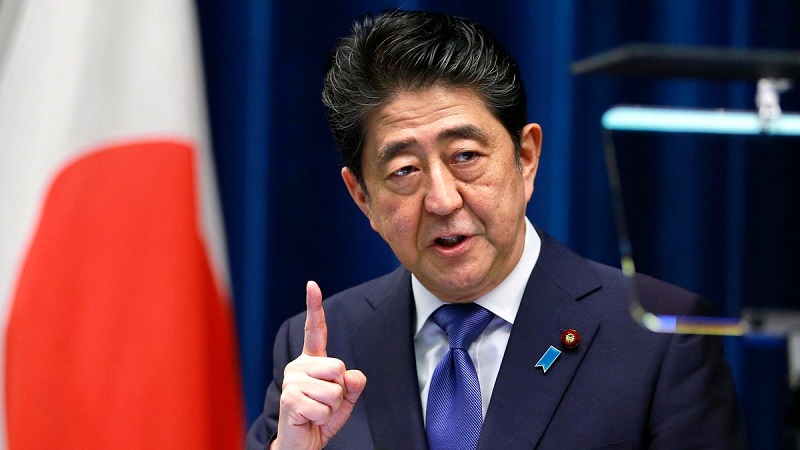
Former Japanese Prime Minister Shinzo Abe was assassinated at a campaign ground.
In the developing story the Prime Minister of Japan, Shinzo Abe, has died after being shot at a campaign event.
Japanese officials say they have a suspect in custody and believe the gun used to assassinate Abe was homemade.
Abe was the country’s longest serving Prime Minister, with two separate terms in the office before retiring in 2020 for health reasons.
The world reacted with horror and shock at the cold-blooded assassination of former Japanese Prime Minister Shinzo Abe
Abe was giving a campaign speech in the city of Nara, in southern Japan, when he was shot in the neck and heart at close range.
The alleged gunman named by local authorities as 41-year-old Tetsuya Yamagami was photographed throwing a homemade firearm to the ground before being tackled by security officials.
Videos of the shooting circulating online show the gunman approaching Abe from behind before firing two shots, both producing extremely loud cannon-like booms and plumes of white smoke.
Police later said they found multiple homemade guns and explosives when they searched Yamagami’s house, adding that he had allegedly admitted to shooting Abe with a DIY firearm.
From images of the gun, captured by bystanders including a reporter for Japan’s public broadcaster NHK, experts immediately suspected it was homemade.
“The box-like device is wrapped in black tape and smoke can be seen coming from the muzzle. It’s certainly no standard shotgun,” a former detective for the Metropolitan Police Department firearms control division said after reviewing photos.
While stressing it’s too early to be definitive about the precise design of the weapon used to murder Abe, another authority said the gun appeared to have some highly unusual features.
“I think the first interesting observation is that it’s clearly electrically fired,” said N. R. Jenzen-Jones, an arms and munitions intelligence specialist and Director of the U.K.-based Armament Research Services (ARES).
“There’s electrical wire passing through each of those end caps that you can see in one of the images. That indicates to me that it’s an electrically-fired firearm.”
“My hunch is that it’s probably a muzzle-loading design,” Jenzen-Jones added. “It’s probably a smooth-bore weapon by which I mean unrifled, like a shotgun but again, that’s not a certainty.”
Jenzen-Jones also thought that the apparent design was fairly atypical of those he’s seen during more than 10 years of research on improvised guns. “It’s not a common craft-produced design that we see all over the world,” he added.
Reiterating caution about drawing conclusions too soon, Jenzen-Jones also suspected the gun used “separate-loading” ammunition that is, where the propellant and projectile are loaded separately, like a musket.
“Japan not only has very strict firearms laws but also very strict laws regulating the sale and possession of ammunition,” he added, saying that may explain why the gun’s creator may have opted for a design that didn’t require commercial ammunition.
Owing to its stringent laws, Japan has extremely low rates of gun crime. With a population of 125 million people, Japan only saw 10 criminal cases involving guns last year, of which only one resulted in someone being killed, local police say.
Even on a global scale, the use of homemade guns has a storied history but they are used in only a tiny fraction of violence involving firearms. Many homemade weapons were seized from both Loyalist and Republican forces during the decades-long conflict of The Troubles in Northern Ireland.
ISIS fighters were also found to have developed improvised shoulder-fired missile launchers in Syria. And in more recent years, experts have worried about the proliferation of guns that use 3D-printed components, particularly in countries where guns are otherwise difficult to obtain.
In 2019, a neo-Nazi gunman was believed to have used such parts in a synagogue shooting in Germany that left two dead and two others injured.
“It’s not that uncommon to see production of craft-produced firearms both in domestic and conflict contexts,” Jenzen-Jones says, “What’s much more uncommon is to see their use.”
There’s been an outpouring of sympathy from World leaders. In a statement, the White House said that they were shocked and saddened to hear about the attack.
Former President Trump also expressed condolences, calling the news absolutely devastating.
About The Author