Educating Nigerian children on the right values
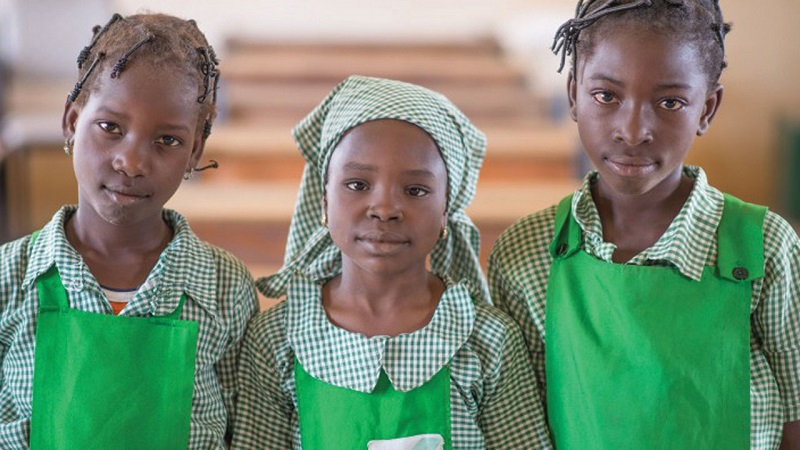
Speaking as a matter of fact and reeling out what can be described as
the gospel truth, President Muhammadu Buhari in Daura, Katsina State,
implored parents to inculcate the right values in their children.
He outlined some of the right values parents should inculcate in their
children including deep fear of God, respect for constituted
authorities and living a purposeful life through continuous education.
The President, who spoke at the Emir of Daura’s Palace during his
Sallah homage there, said that more time should be given to the
coaching of future leaders, with basic knowledge of moral values, as
the fast-changing world, driven by new technology, would be more
competitive and demanding.
He pointed out that oral values are important in whatever stage of
life. But most of the values we have as adults were instilled in us
during our childhood years. That’s why it’s essential that we teach
our children the values that we want them to have as adults.
Therefore, the President cannot be faulted here. After all, it is
clear to all who cared to observe that Nigeria is suffering from the
effects of values degradation and, in some cases, the collapse of the
entire values.
Thus, we hear so much these days about how important it is that
parents instil good values in their children. The truth is that if
parents don’t accept this responsibility, then, the void may be filled
by negative forces in our culture, that do not support healthy morals
and ethics for our families.
However, the more aware parents are of their own values, the clearer
they will be in expressing them and communicating them to their
children. Values are very important in parenting since they deeply
influence all behaviours and attitudes and affect our decisions and
relationships.
Yet, for a value to be truly your own, you must act on it and your
behaviour must reflect it – not just verbally accept it or think that
you should follow it.
Knowing good moral values such as kindness, humility, courage, and
compassion at an early age builds a child’s character. It forms the
very core of their being and becomes a foundation of their moral
beliefs.
This is why it’s essential to start teaching them moral values while
they’re still children. Those values mould them to become the person
you want them to be. When children can tell what is right from wrong,
they can also determine the good from the bad. This helps shape their
perception of the world.
A child who has a strong moral compass will not just stand idly by
when an injustice is happening. They will take action to correct it in
whatever way they can. And this is what we need now in society. The
youths should be forward-looking, progressive and developmental while
at the same time maintaining their sanity and moral compass with a
view to building a morally upright society.
No doubt, doing good things help children feel good about themselves.
That exhilarating feeling of being able to give back and help others
is not exclusive to adults. Children feel it too. This
self-affirmation helps boost their self-confidence which, in turn,
helps them develop positive relationships, build bridges and
strengthen bonds of unity in the country which is needed now to keep
the country as one.
Hence, a strong character makes a strong personality. And that strong
character is made by the virtues and values that a kid learns during
his/her early childhood. In the end, just like it was pointed out by
the President, modesty, honesty and strength are some of the basic
habits that children must be taught in order for them to develop,
within them, and decide their right path in life.
Regrettably, it can be said that corruption, a menace in Nigeria, and
a cankerworm which has for a long time, and unjustifiably so, stunted
our nation’s development, instill imbalances in the system and cause
division among Nigerians, does not appear capable to allow, or
inspire, admiration or love among the citizenry which is vital for
Nigeria’s security and development.
Regrettably, too, the corrupt system now in operation in Nigeria is
built on the best use of our vices, including greed. The sad truth is
that this system has failed miserably because, with endemic
corruption, it accords less significance to human nature including
empathy, togetherness and love.
In fact, in Nigeria today, while the government preaches honesty,
unity and love and insists on morality, the truth is the more the
people seem to buy into these standards, the more the corrupt and
powerful government officials use same to pursue their own personal
agendas while cloaking it under the name of common good or ethics.
Therefore, as Nigerians, we need to understand our social and cultural
values and standards so that government, at all levels, can set up
systems that are impervious to our manipulations. What we need in our
country is a system that is not only just but also forces us to do the
right thing and punishes wrongdoers.
As Buhari participates in trial census, is NPC ready for 2023?
The first phase of Census 2023 – the trial House listing and House
numbering – took off officially in selected local government areas of
the country Wednesday, this week, with President Muhammadu Buhari
giving his blessing to the exercise.
The President urged officials involved in the exercise to justify the
confidence that the government has in them by returning accurate,
verifiable and dependable data.
The National Population Commission (NPC) has said the next Population
and Housing Census in the country will be held in April 2023.
The last population and housing census in Nigeria, conducted in 2006,
put the country’s population at 140 million.
Census is important because without gathering statistics about the
number of people living in a place at a particular period of time, it
will be impossible to compare socio-cultural, economic, social and
demographic changes.
Moreover, it will be impossible to estimate the level of life in the
country and make forecasts about the perspective of national
development and national population growth. Census provides a suitable
database for comparisons and projections of demographic data as well
as social and economic characteristics of society.
The conduct of the census has always been problematic in Nigeria. The
1962, 1963 and 1973 censuses were bedevilled with controversies. They
were mostly about the deliberate manipulation of census figures at
sub-national levels. The 1973 census provoked debate along ethnic
lines. In 2006, the Lagos State government rejected the figures and
ran a parallel census.
The 2006 census was the last one, so Nigeria is overdue for another
and to mark the commencement of the exercise, the National Population
Commission (NPC) accredited President Muhammadu Buhari at his country
home in Daura, Katsina State.
“I am happy you have started the process, and congratulations,” the
President told the team from NPC led by the Chairman, Hon. Nasir Isa
Kwarra. “I know this will require a lot of time, skill and stamina.”
The NPC chairman said: “The Trial Census shall cover a total of 7681
Enumeration Areas (EAs) in the 36 States and the FCT. Six LGAs have
been selected from the six selected states in the six geo-political
zones of the country for full population enumeration while forty-five
EAs in nine LGAs cutting across three senatorial districts were
selected from each of the thirty States and the FCT for enumeration.”
The Trial Census fieldwork includes building numbering and household
listing from 13th to 15th of July 2022; validation of EA frame from
16th to 18th July, 2022; person’s enumeration from 19th to 25th of
July 2022; and enumeration mop up from 26th to 30th of July 2022. As
part of the exercise, Enumerators are expected to visit all
residential and non-residential buildings within the selected
Enumeration Areas and number the buildings and enumerate members of
households in the buildings.
At the end of the trial census exercise, the NPC expects to take away
lessons on their chosen methodology, workload, challenges of data
collection in peculiar areas and the education as well as the adequacy
of the preparation of their enumerators.
So, is Nigeria ready for the census next year? The national census is
a colossal, expensive and labour-intensive statistical operation that
requires extensive planning. The success of a census depends on
several factors. These include technical expertise, independence from
political interference, excellent geo-referenced maps, huge human and
financial resources and good timing.
Although some of the pre-census activities like the enumeration area
demarcation have been well implemented, it is unrealistic to assume
that everything will be ready. Recruitment and payment of staff were
critical issues in the 2006 census while the year 2023 is an election
year with many political activities and this might affect the census.
Nigeria’s security challenges and the economy are factors to be
considered, too.
Then, there’s the unpredictable dimension of COVID-19. The level of
public and professional awareness of the census is also very low.
Census is a huge scientific responsibility that requires a high level
of preparedness, transparency and quality assurance but, in the end,
we can only hope and pray that the commission does live up to its
responsibilities.
About The Author